Nazi Expulsion and Extermination of Jews and Roma
The Painted BirdNazi Expulsion and Extermination of Jews and Roma forms the historical pressure behind some of the most consequential scenes in The Painted Bird: people are carried away in locked trains, while those left beside the railway encounter evidence of their fate. The novel also shows how persecution reaches beyond deportation itself, shaping whether villagers will shelter someone marked as Jewish or Roma and how they respond to people trying to escape. In the author’s later defense of the book, these literary scenes are placed beside survivor testimony and camp records, making the distinction between fiction and documentary evidence essential to understanding the subject.
Occupation, Classification, and Exposure
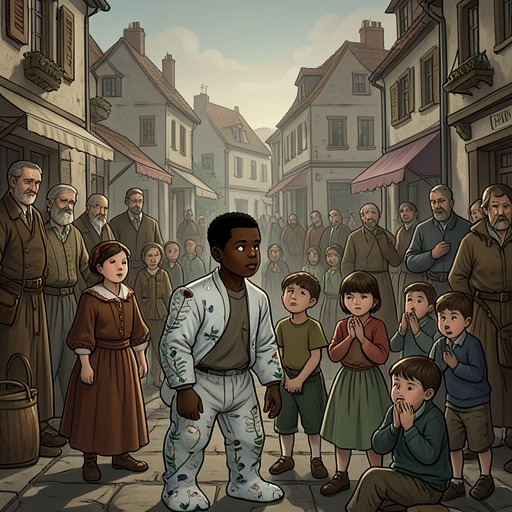
The boy’s appearance makes him vulnerable to being classified by others as Jewish or Roma. In the villages where he spends years, his dark hair, eyes, and skin distinguish him from many local inhabitants; the novel describes how this perception puts anyone who shelters him at risk of punishment by the German occupation forces. Persecution thus operates not only through the removal of its intended victims but also through threats that pressure communities to refuse refuge. The boy’s uncertain safety is bound to a system in which an imposed identity can carry lethal consequences, regardless of what he knows about his own origins.
The broader occupation deepens the poverty and insecurity against which these choices are made. Villages must supply much of their meager produce both to regular troops and to Partisans; refusal can bring punitive raids and destruction. At another village, German soldiers arrive three times a year to collect required food and materials. These details do not make local participation in persecution inevitable, but they establish a setting where military power, scarcity, and fear constrain ordinary life. The threat of German punishment is repeatedly invoked as a reason to treat the boy as a danger to the people who might shelter him.
Deportation Trains and the Camps
The boy sees a change in the traffic on a railway through the forest. Alongside freight trains carrying armed guards, locked cattle cars pass with Jews and Roma crowded inside. Information reaching the village identifies the passengers as people captured and being sent to their deaths; accounts attributed to people who had worked on a camp describe sorting after arrival and the removal of possessions. The reported scale is stark: as many as two hundred people are said to be packed into a car, including adults, children, and infants.
The evidence conveyed about the camps also stresses the machinery of disposal. The narrator reports that gas chambers and ovens could not process everyone killed, and that thousands were buried in pits around a camp. The book’s account of these arrangements describes a system that treated people as a mass to be transported, stripped of belongings, and killed. It gives the reader not only the fact of deportation but also the limits of the camp’s capacity to conceal what followed.
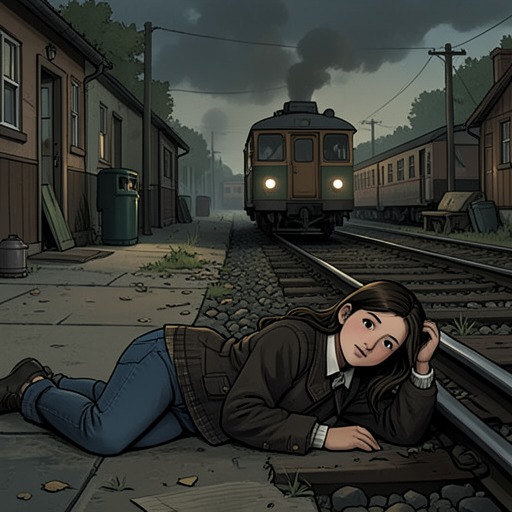
The trains become public spectacles along their route. Villagers stand beside the tracks and wave toward the engine and guards; faces and raised arms can sometimes be seen through small windows in the locked cars. The scene places the passengers’ attempt to signal outside against the villagers’ apparently welcoming gestures. Elsewhere, the narrative reports that some passengers try to send children out through windows or escape from damaged floors. The boy and other villagers later search the railway margins after news of nighttime trains. They find a small boy who has fallen from a train, but the villagers do not take him in: after he dies, they strip away his clothes and leave him on the track, where a German patrol will find him. The episode makes the danger of escape—and the local refusal of aid—part of the same chain of persecution.
Local Responses and the Persecuted Child
The villagers’ responses range from fearful avoidance to participation in the material aftermath of deportation. Some wave at trains carrying people to their deaths; others search the railway for abandoned belongings and valuables. After bodies are discovered, clothing and shoes are taken, and the remains are left for German patrols to deal with. The account presents these actions without suggesting that every villager has the same motive: fear of contamination, religious prejudice, self-interest, and indifference appear in the surrounding episodes. Together they show how the violence of the occupation is accompanied by social behaviors that deny the victims protection and preserve benefits for those who come after them.
The consequences for the boy are immediate. When villagers hear that a Jew is being hidden in one of their communities, his farmer orders him to flee before an expected raid. The hidden man is known to the village and remembered as a former landowner who had been well liked, yet that familiarity does not remove the danger once the Germans learn he is there. The boy leaves at night and hides in a field; German soldiers surround it by dawn. The episode links the policy’s danger to the boy’s recurring displacement: even a temporary place to stay can become unsafe when a community is exposed to a raid.
Documentary Evidence and Literary Representation
The author’s later discussion answers critics who regarded The Painted Bird as an exaggeration of wartime cruelty or as personal reminiscence presented without historical grounding. In support, it points to a survivor’s account of a village punished for sheltering an enemy of the Reich, and to camp documents and diaries describing the killing of children and the deaths of Jewish and Roma prisoners. The book therefore offers two distinguishable kinds of material: scenes narrated through the boy’s experience and historical testimony invoked by the author. The documentary material supports the historical seriousness of the violence, but it should not be confused with the novel’s fictional scenes or treated as proof for details that the documents do not establish.
The author also sets the dispute over the novel’s intensity against the scale of personal loss: of about sixty family members who attended a reunion in 1938, only three survived the war. Old school friends later told the author that the novel seemed mild beside what they and their relatives had experienced. These claims explain why the book’s violence is defended not as spectacle but as an attempt to represent an atrocity that readers might otherwise dismiss as implausible. Within the narrative, the boy’s encounter with human ash gives the policy a further consequence: what happened to the deported remains with him as fear and an enduring image of the dead. The historical frame and the child’s viewpoint thus meet at a point where mass persecution is both a documented reality and a lasting burden on those who witness its traces.